
How Does a Milk Cooler Work? Everything Dairy Farmers and Cooperatives Need to Know
If you have ever wondered how does a milk cooler work — or why proper milk chilling is non-negotiable in a commercial dairy operation — this guide covers everything you need to know. From the science behind rapid cooling to the key components that make it happen, understanding your milk chiller helps you make better purchasing decisions, maintain your equipment properly, and protect the value of every litre you collect.
Kenya’s dairy sector is one of the most productive in Africa, with millions of smallholder farmers, cooperatives, and collection centres contributing to a supply chain that moves raw milk from farm to processor every single day. At the heart of that chain is the milk cooler — and how well it does its job determines whether that milk reaches its destination at full value or is condemned at the gate.
What Is a Milk Cooler?
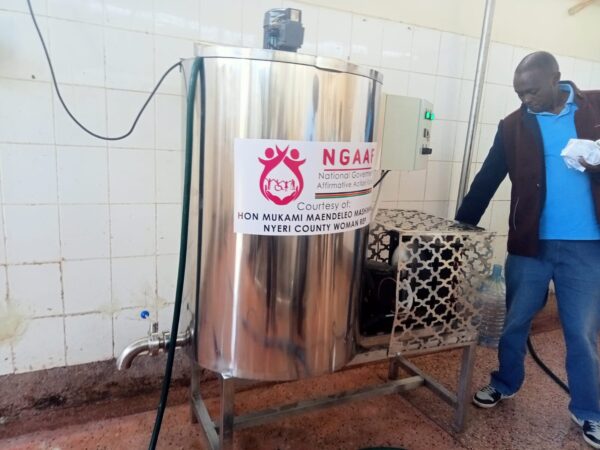
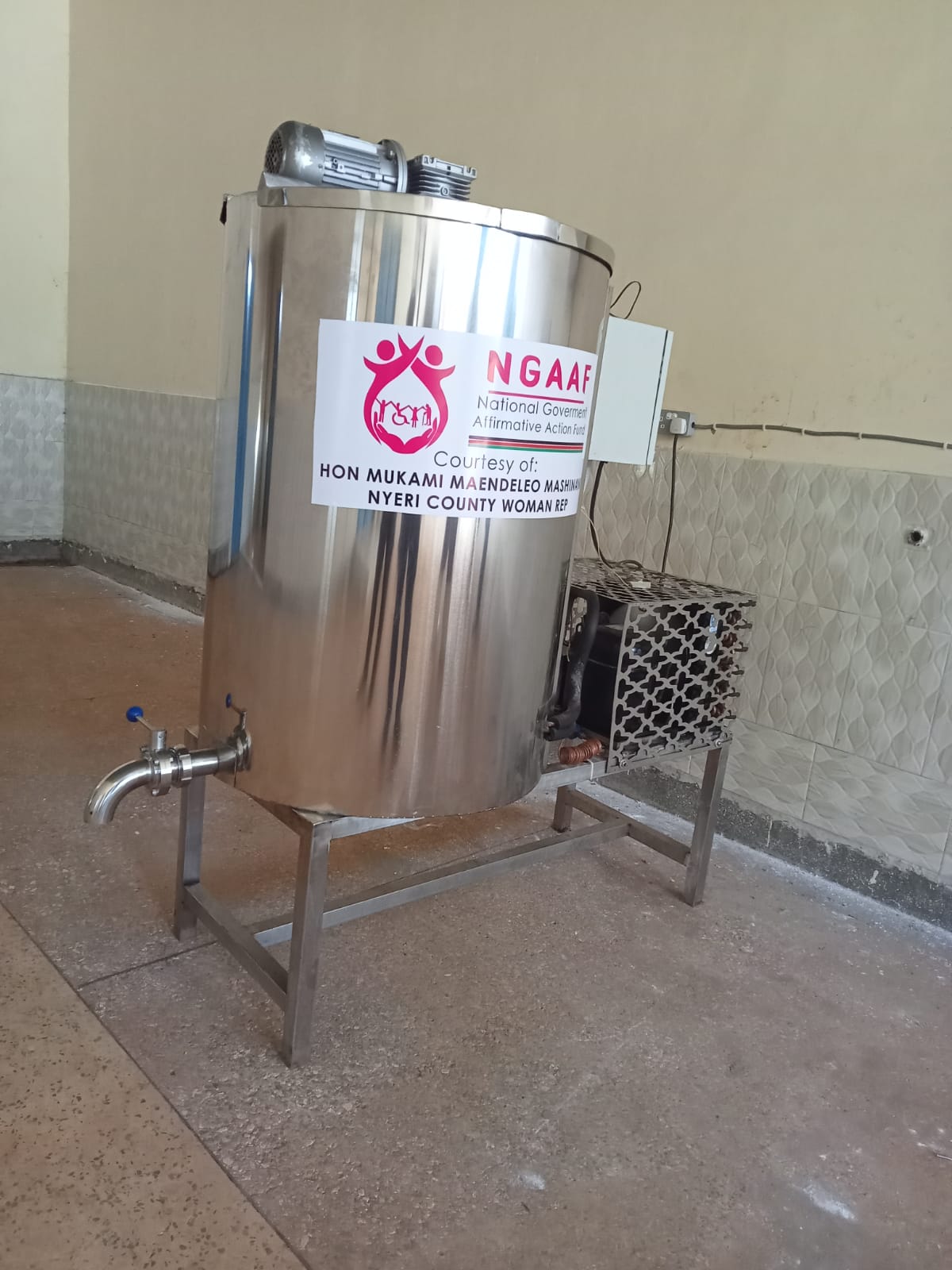 A milk cooler — also referred to as a milk chiller or Bulk Milk Cooler (BMC) — is a stainless steel refrigeration unit engineered to rapidly lower the temperature of fresh raw milk from its natural body temperature of around 37°C down to 4°C or lower. At 4°C, bacterial activity in raw milk is dramatically slowed, which halts the deterioration process and preserves both the safety and nutritional quality of the milk until it can be transported to a processing facility.
Milk coolers are used at multiple points along the dairy supply chain: on individual farms, at village cooperative collection points, at county-level chilling centres, and within large industrial dairy plants. They are available in a wide range of capacities — from 100 litres for a small farm up to 10,000 litres or more for major processing hubs.
Pro Tip: Raw milk at 37°C can deteriorate within two hours if left uncooled in warm conditions. Getting it to 4°C within 2–3 hours of milking is the global standard for maintaining Grade A milk quality.
How Does a Milk Cooler Work?
At its core, a milk cooler operates on the same refrigeration principles as a household refrigerator or commercial cold room — but it is engineered specifically for the properties of raw milk and the demands of a dairy environment. Here is the step-by-step process:
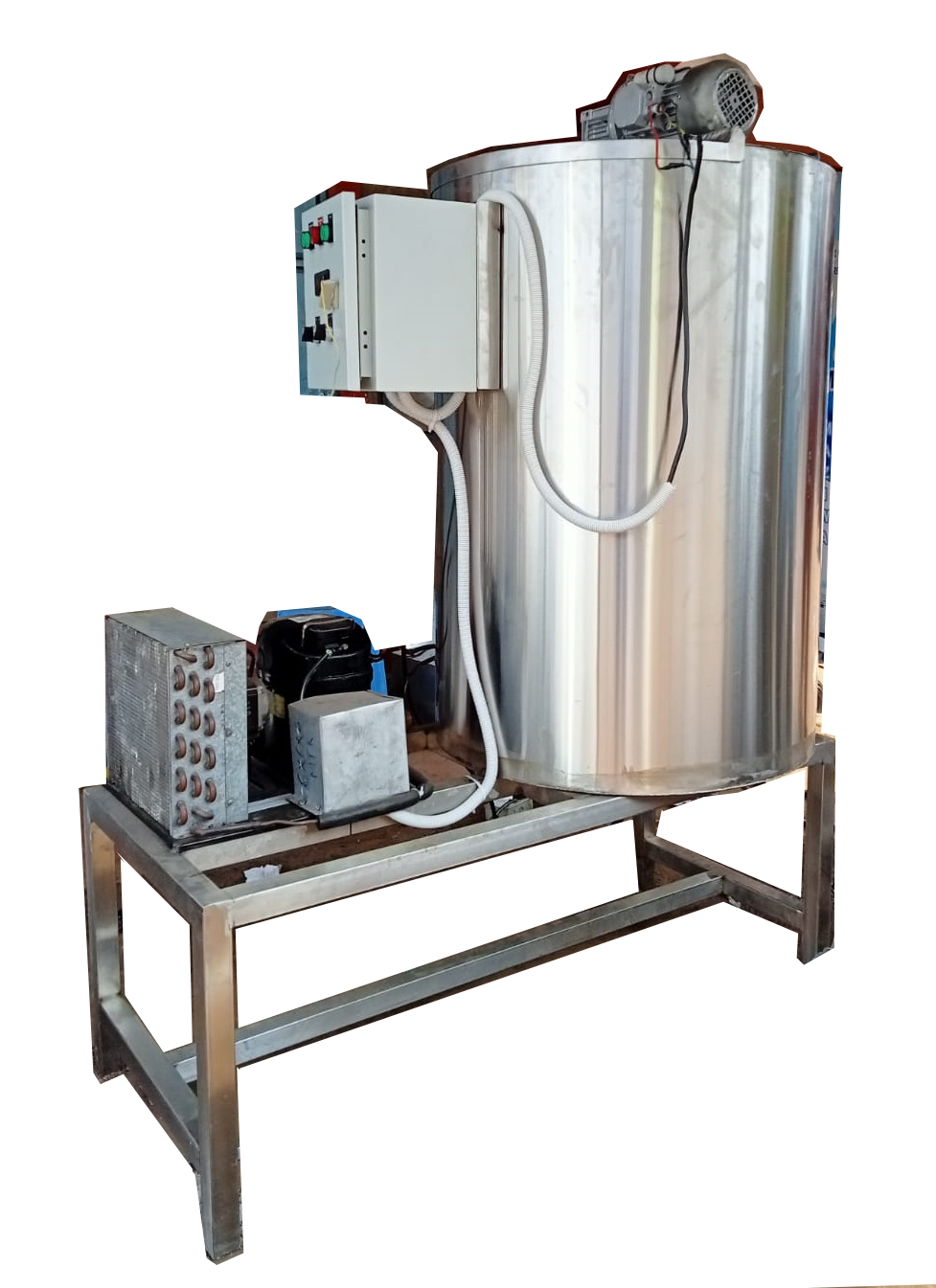
Fresh warm milk is poured or pumped into the insulated stainless steel tank. The refrigeration system — comprising a compressor, condenser, and evaporator — then goes to work extracting heat from the milk. The evaporator coils are mounted directly against the inner wall of the tank, creating a direct heat exchange surface. As the refrigerant circulates and evaporates through these coils, it absorbs heat from the milk, which transfers through the tank wall. That heat is then carried by the refrigerant to the condenser, where it is released into the surrounding air.
Simultaneously, a motor-driven agitator — essentially a low-speed paddle inside the tank — continuously stirs the milk. This ensures the temperature drops uniformly throughout the entire volume. Without agitation, the milk nearest the cold wall would freeze while the milk in the centre remained warm, creating uneven cooling and potential fat separation.
The result is milk held consistently at or below 4°C, with bacterial counts remaining low until the milk is collected and transported.
Pro Tip: Two main cooling technologies are used in milk chillers: Direct Expansion (DX) and Ice Bank. DX systems cool the milk directly and are faster, making them better for high-volume operations. Ice Bank systems build up a thermal reserve and are better suited to farms with irregular power supply or off-peak electricity tariffs.
Also see: Milk Cooling Tanks Made In Kenya
Key Components and Features of a Milk Cooling Tank
Understanding the individual components of a milk cooler helps you assess build quality, compare models, and diagnose issues when they arise. Here is what every quality milk cooling tank should include:
Refrigeration System 

The compressor is the engine of the cooling process, circulating refrigerant through the system and driving heat transfer. It works in tandem with the condenser — which releases absorbed heat into the air — and the evaporator coils, which are bonded to the tank shell to extract heat from the milk. In Direct Expansion (DX) systems, this process is highly efficient because the refrigerant makes direct contact with the milk’s containing surface, enabling rapid temperature reduction. A well-specified compressor matched to the tank volume is critical; an undersized unit will struggle to hit target temperatures in time, while an oversized one cycles too frequently and wears out faster.
Insulated Tank Shell
The tank body is the structural and hygienic core of the unit. High-quality milk chillers use AISI 304 food-grade stainless steel for both the inner and outer shells, with a thick layer of insulating material — typically high-density polyurethane or polystyrene foam — sandwiched between them. This insulation minimises heat gain from the environment, meaning the refrigeration system does not have to work as hard to maintain target temperatures. It also allows the milk to remain cold for extended periods during power outages — an important consideration for rural dairy operations in Kenya where power reliability can be unpredictable. The smooth interior surface of food-grade stainless steel is easy to clean, resistant to corrosion, and does not impart any taste or odour to the milk.
Agitator / Mixer
The built-in agitator is one of the most important features of a milk cooling tank, yet it is often overlooked in purchasing decisions. Driven by a motor mounted outside the tank, the paddle rotates at a low speed to keep the milk gently but continuously in motion during the cooling cycle. This serves several functions simultaneously: it prevents fat from rising and separating at the surface, it eliminates cold spots near the tank wall and warm spots in the centre, and it ensures that samples taken from the tank are representative of the entire batch. Without a properly functioning agitator, cooling uniformity suffers and milk quality assessments become unreliable. Quality Gditech milk chillers use robust, food-safe agitator materials and sealed motor mounts to prevent contamination.
Digital Controls and Monitoring
Modern milk cooling tanks incorporate digital control panels that allow operators to monitor temperature in real time, set cooling targets, and receive alerts if temperatures rise above acceptable thresholds. Some systems include data logging functionality, which records temperature over time — a feature that is increasingly required by large processors and export-oriented dairy operations as part of traceability and cold chain documentation. Advanced units may also feature automatic Clean-in-Place (CIP) systems, which circulate cleaning and rinsing solutions through the tank at the end of each collection cycle, reducing manual cleaning labour and improving hygiene consistency. For KEBS-certified operations, accurate temperature monitoring and documentation is not just useful — it is a compliance requirement.
Available Capacities
Milk cooling tanks are available in a wide range of capacities to suit every scale of dairy operation. Here is a practical guide:
| Capacity | Typical Application | Recommended For |
| 100 – 200 L | Smallholder farm | Individual farmer, 2–5 cows |
| 500 L | Small cooperative / collection point | Village milk groups, 10–20 farmers |
| 1,000 – 1,200 L | Medium cooperative / chilling centre | Ward-level collection, 30–50 farmers |
| 1,500 – 3,000 L | Large cooperative / county hub | County aggregation points |
| 5,000 – 10,000+ L | Industrial dairy plant | Large processors, national dairies |
Pro Tip: Always size your milk cooler for your projected peak volume, not your current average. Under-filling a larger tank is far less costly than overflow or inadequate cooling during peak seasons.
Key Advantages of Using a Milk Cooling Tank
Bacterial Control and Milk Safety:
 Chilling milk to 4°C within hours of milking is the single most effective intervention for suppressing bacterial growth in raw milk. Pathogens such as Listeria, Salmonella, E. coli, and Staphylococcus aureus multiply rapidly at ambient temperatures but are dramatically slowed below 4°C. Regular chilling means your milk consistently meets the bacterial count thresholds required by processors and regulatory bodies.
Over time, dairy operations with reliable cooling infrastructure build a strong reputation for quality, which translates directly into premium pricing from processors. Crucially, rapid chilling achieves all of this without affecting the nutritional profile, fat content, protein structure, or natural flavour of the milk.
Extended Shelf Life and Reduced Wastage:
One of the most tangible economic benefits of investing in a milk cooler is the dramatic reduction in post-harvest losses. Uncooled raw milk in Kenya’s ambient temperatures can sour and become unsaleable within a few hours — a problem that is most acute during the long rains season when ambient temperatures are highest.
Properly chilled milk can be stored safely for 48 to 72 hours, giving cooperatives, collection centres, and transporters the flexibility to manage logistics without racing against spoilage. This extended window reduces the pressure to sell at low prices to the nearest processor and opens the door to better commercial terms. For farmer groups and cooperatives, the reduction in daily wastage can be the difference between a profitable operation and a perpetually struggling one.
Compliance with Regulatory and Processor Requirements:
Kenya’s dairy industry is regulated under KEBS and the Kenya Dairy Board (KDB) standards, both of which specify maximum bacterial counts and temperature requirements for raw milk at collection points and processing intake. A KEBS-grade milk chiller is not optional for any serious commercial operation — it is the foundation of regulatory compliance.
Processors increasingly reject milk that does not arrive within temperature specifications, and repeat rejections can result in loss of supply contracts. Investing in a certified, compliant milk cooling tank from a reputable manufacturer like Gditech protects your operation from these risks and positions your cooperative or farm as a reliable, preferred supplier.
Energy Efficiency and Operational Cost Savings:
Modern milk cooling tanks are engineered with energy efficiency as a design priority, not an afterthought. Features such as high-density insulation, variable-speed compressors, and heat recovery systems — which capture heat removed from the milk and use it to pre-heat water for cleaning — significantly reduce the unit’s electricity consumption over its operational life.
For off-grid or solar-powered dairy operations, energy-efficient chillers are a practical necessity. Over a typical machine lifespan of 10 to 15 years, the cumulative electricity savings from a well-designed unit can amount to a significant sum — making the upfront investment in quality even more financially justified.
Increased Bargaining Power and Income for Farmers:
When farmers and cooperatives can store milk reliably and present it within temperature and quality specifications, they are no longer forced to accept whatever price is on offer that morning. Reliable cold storage transforms the commercial dynamic: instead of selling under pressure, dairy operators can hold milk, shop around for the best processor price, or aggregate larger volumes before selling.
This shift in bargaining power has real and measurable income implications for smallholder farmers. Studies across East Africa consistently show that access to functional milk cooling infrastructure correlates with higher farm-gate prices and more stable dairy incomes — making a milk cooler one of the highest-return investments a cooperative can make.
Advantages of Buying Milk Cooling Tanks from Gditech
Gditech is Kenya’s leading manufacturer of high-quality milk cooling tanks, trusted by smallholder dairy farmers, cooperatives, collection centres, and large processors across the country. Here is why buying from Gditech is the smartest decision for your dairy operation:
Purpose-Built for Kenyan Dairy Conditions:
 Gditech milk coolers are designed and manufactured in Kenya with full understanding of the country’s dairy landscape — the water quality, ambient temperatures, power reliability challenges, and the specific handling and hygiene practices of Kenyan cooperatives.
This local engineering intelligence means our machines perform reliably in conditions that would stress or shorten the lifespan of imported units. We do not adapt foreign designs to local use; we build from the ground up for the Kenyan context. That difference in design philosophy shows in real-world performance and machine longevity.
KEBS-Grade Quality and Certification:
Every Gditech milk chiller is manufactured to meet Kenya Bureau of Standards (KEBS) requirements for dairy equipment, giving buyers the assurance that they are investing in a machine that will pass inspection and support regulatory compliance from day one. Our tanks use AISI 304 food-grade stainless steel throughout all milk-contact surfaces, and our refrigeration components are sourced from certified suppliers with documented performance specifications. For cooperatives and collection centres that supply to major processors or export-oriented operations, KEBS-grade equipment is a non-negotiable requirement — and Gditech delivers it consistently.
Full Range of Capacities for Every Scale:
Whether you are an individual farmer looking for a 100-litre unit or a county-level cooperative that needs a 5,000-litre industrial chilling tank, Gditech has the right machine for your scale. Our product range covers the full spectrum of dairy operation sizes, and our technical team will assess your specific milk volumes, peak collection times, and logistical setup to recommend the most appropriate capacity and configuration. Buying the right-sized machine from the start avoids the cost of under-performance or unnecessary oversizing — and Gditech’s consultative sales approach ensures you make that call correctly.
Nationwide Delivery and Professional Installation:
Gditech delivers milk cooling tanks to every part of Kenya and provides professional installation by trained technicians who ensure your unit is set up, tested, and operating correctly before they leave. Installation includes commissioning of the refrigeration system, calibration of temperature controls, and a practical handover session with your operators so they understand how to run and care for the machine from day one. This end-to-end service means you are not left to figure things out from a manual — you have the confidence of knowing your investment has been set up right.
Reliable After-Sales Support and Spare Parts:
Gditech’s relationship with customers does not end at delivery. We maintain a scheduled maintenance programme, a responsive technical support team, and reliable access to genuine spare parts for all machines we manufacture. This matters enormously in a dairy operation where even a 12-hour equipment failure during peak collection season can result in significant milk losses and reputational damage with processors. Knowing that help is a call or WhatsApp away — and that the person answering understands your machine inside out — is a level of support that imported or grey-market equipment simply cannot offer.
Conclusion: Why Milk Cooling Is the Foundation of a Profitable Dairy Operation
 Understanding how a milk cooler works is not just technical knowledge — it is the foundation of good dairy management. Rapid chilling from 37°C to 4°C halts bacterial growth, preserves nutritional quality, extends shelf life, and positions your operation to meet the quality standards that processors and regulators demand. The technology behind it — a refrigeration cycle, food-grade tank, agitator, and digital controls — is proven, durable, and increasingly accessible at every scale of operation.
For Kenyan dairy farmers, cooperatives, and collection centre operators, investing in a high-quality milk cooling tank from Gditech is one of the most impactful commercial decisions you can make. It reduces wastage, strengthens your bargaining position, ensures regulatory compliance, and ultimately puts more value from every milking session into your pocket rather than down the drain.
Gditech milk coolers are manufactured in Kenya, built for Kenya’s dairy realities, and backed by a team that understands the challenges you face. Whether you are setting up a new collection point or upgrading ageing equipment, we have the right machine, the technical expertise, and the after-sales commitment to make your investment count.
Ready to Upgrade Your Dairy Operation? Contact Gditech Today
Every litre of milk your dairy operation produces has value. A Gditech milk cooler makes sure it stays that way.
Gditech manufactures the highest quality milk cooling tanks in Kenya — KEBS-grade, built to last, and backed by local expertise you can count on. From 100-litre farm units to 10,000-litre industrial tanks, we have the right solution for your operation. Our machines are delivered to your doorstep and professionally installed. Get in touch today via call or WhatsApp: +254 715 014510.
5 Reasons to Choose Gditech:
- Engineered for Kenyan dairy conditions — not adapted from foreign designs
- KEBS-grade stainless steel construction and certified refrigeration components
- Full capacity range from 100 L to 10,000+ L for every operation size
- Nationwide delivery with professional installation and operator training
- Reliable after-sales support and fast access to genuine spare parts
Contact us to order a milk cooling tank today
To order, you can reach us on:
- Phone Call: +254 715 01 45 10
- WhatsApp: +254 715 01 45 10
- Email: gditech2019@gmail.com, info@gditech.co.ke
- Fill out our Contact Us Form.
Visit Our Branches
For those who prefer a face-to-face interaction, we welcome you to visit our branches located strategically in Kenya:
- Ruiru Branch:Find us Next to Total Petrol Station- Kihunguro, Ruiru Kenya – Thika Road, where our dedicated team is ready to assist you.
- Eldoret Branch:Visit our Eldoret branch us at Rehema Complex, opposite Japara Ltd., along Oloo Street in Eldoret. Our branch staff will provide you with personalized guidance and support.
Frequently Asked Questions
- How does a milk cooler work?
A milk cooler uses a refrigeration cycle — compressor, condenser, and evaporator — to extract heat from raw milk and reduce its temperature from around 37°C to 4°C or below. A built-in agitator stirs the milk continuously to ensure uniform cooling throughout the tank. The result is chilled milk that inhibits bacterial growth and maintains quality until collection.
- What temperature should a milk cooler maintain?
The international and KEBS standard for raw milk storage is 4°C or below. At this temperature, bacterial multiplication is dramatically slowed, allowing milk to be stored safely for up to 48–72 hours before processing.
- What is the difference between a Direct Expansion (DX) and Ice Bank milk cooler?
In a Direct Expansion system, the refrigerant evaporates in coils directly attached to the tank wall, cooling the milk rapidly and efficiently. An Ice Bank system first chills a water/glycol bath around the tank, then uses that thermal reserve to cool the milk — making it more suitable for operations with unreliable power supply or off-peak electricity pricing.
- What sizes do milk cooling tanks come in?
Gditech manufactures milk cooling tanks ranging from 100 litres for small farm use up to 10,000 litres and beyond for industrial dairy plants and county-level collection hubs. Capacity selection should be based on your peak daily milk volume and collection frequency.
- Where can I buy high-quality milk cooling tanks in Kenya?
Gditech is Kenya’s leading manufacturer of KEBS-grade milk cooling tanks, supplying farmers, cooperatives, and processors nationwide. We offer nationwide delivery and professional installation. Contact us via call or WhatsApp on +254 715 014510.
- Are Gditech milk chillers KEBS certified?
Yes. Gditech milk chillers are manufactured to meet Kenya Bureau of Standards (KEBS) requirements for dairy equipment, using AISI 304 food-grade stainless steel and certified refrigeration components. They are suitable for regulated dairy operations, processor supply chains, and export-oriented cooperatives.
- Does Gditech deliver and install milk cooling tanks across Kenya?
Yes. Gditech delivers milk cooling tanks to all parts of Kenya and provides professional installation and commissioning by trained technicians. Installation includes system testing, temperature calibration, and operator handover training.


