
Cost of Solar Panel Installation in Kenya: 2026 Prices, Packages and Savings Guide
Introduction: Understanding the Real Cost of Solar in Kenya
If you are considering switching to solar energy, one of the first questions you will likely ask is simple: How much does it cost to install solar panels in Kenya? This is a very practical concern. Whether you are a homeowner trying to reduce monthly electricity bills, a business owner seeking reliable backup power, or a commercial facility planning long-term energy stability, understanding the cost of solar panel installation in Kenya is essential before making an investment.
However, solar pricing is not a one-size-fits-all number. The total cost depends on several factors, including system size, battery capacity, energy usage, and installation complexity. Two homes in the same neighborhood can have very different solar installation costs simply because their energy needs are different.
For example: 
- A small household running lights, TV, and a refrigerator will require a smaller system
- A retail shop with refrigeration and computers will need a medium-sized system
- A factory or commercial building will require a larger, more robust system
Working with an experienced solar system installer like Gditech Kenya ensures that your system is properly sized, safely installed, and cost-optimized for long-term performance.
In this guide, we will break down the real solar system price in Kenya, explain what influences installation costs, and help you understand how to make a smart solar investment in 2026.
What Determines the Cost of Solar Panel Installation in Kenya
The cost of solar panel installation in Kenya is influenced by multiple technical and practical factors. Understanding these factors helps you make informed decisions and avoid unexpected expenses.
1. System Size and Energy Consumption
The most important factor affecting solar cost is the amount of electricity you use daily.
Simply put:
More energy demand requires more solar panels and larger batteries.
For instance:
A typical 2-bedroom home may consume:
- 3–5 kWh per day
A medium-sized business may consume:
- 10–20 kWh per day
A commercial facility may consume:
- 50+ kWh per day
As energy demand increases, the number of panels, inverter capacity, and battery size also increase — which raises installation costs.
Why this matters
Installing a system that is too small can lead to power shortages. Installing one that is too large can result in unnecessary expenses. Proper sizing ensures efficiency and cost-effectiveness.
2. Battery Capacity and Backup Requirements
Battery storage is one of the most significant cost components in any solar system.
If your goal is:
- Daytime electricity savings only → smaller battery required
- Full backup during outages → larger battery required
- Overnight operation → high-capacity battery required
Lithium batteries are now widely preferred because they:
- Last longer
- Charge faster
- Require less maintenance
However, they are more expensive than traditional batteries.
3. Type and Quality of Solar Equipment
 The quality of components directly affects system performance and lifespan.
High-quality equipment typically includes:
- Efficient solar panels
- Reliable inverters
- Durable batteries
- Certified electrical components
Cheaper equipment may reduce initial cost but often leads to:
- Frequent repairs
- Poor performance
- Shorter system lifespan
Investing in quality components ensures long-term reliability and lower maintenance costs.
4. Installation Labor and Technical Expertise
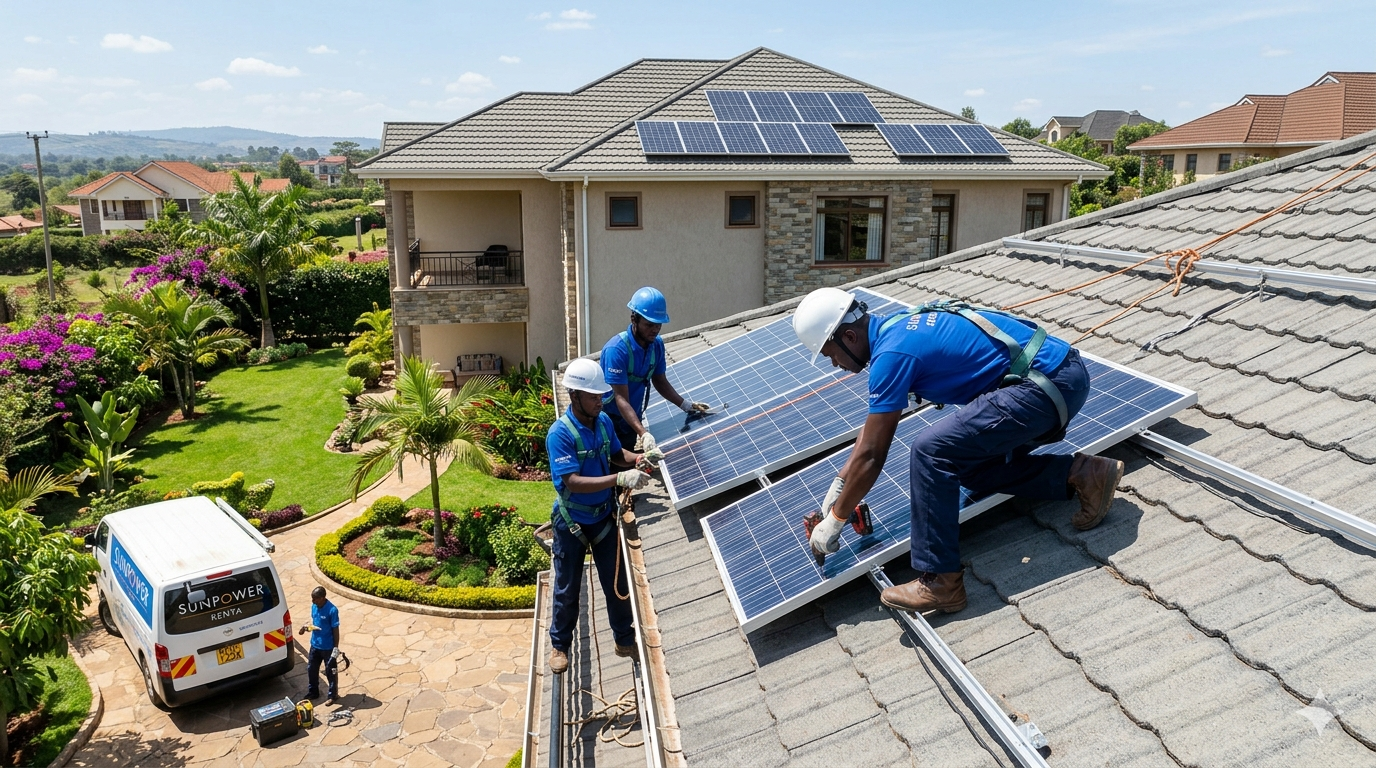
Professional installation requires skilled technicians and certified electricians.
The solar installation charges in Kenya include:
- Site assessment
- System design
- Mounting and wiring
- Testing and commissioning
Experienced installers ensure:
- Safety
- Efficiency
- Compliance with electrical standards
Poor installation can cause:
- System failure
- Fire risk
- Reduced performance
5. Installation Location and Property Design
The physical layout of your property can also affect installation cost.
Factors include:
- Roof height
- Roof type
- Distance between components
- Accessibility
For example:
Installing solar panels on a single-story house is usually less expensive than installing them on a multi-story commercial building.
Solar System Price in Kenya (2026 Estimates)
Below are realistic estimates for the solar system price in Kenya based on typical energy usage.
Residential Solar System Cost Range
| System Size | Suitable For | Estimated Cost |
| Small system | Basic home use | KSh 50,000 – 150,000 |
| Medium system | Family home | KSh 200,000 – 450,000 |
| Large system | High-consumption home | KSh 450,000 – 750,000 |
SME Solar System Cost Range
| Business Type | Estimated Cost |
| Small retail shop | KSh 150,000 – 350,000 |
| Restaurant/medium shops | KSh 450,000 – 800,000 |
| Office | KSh 350,000 – 700,000 |
Commercial Solar System Cost Range
| Facility Type | Estimated Cost |
| Warehouse | KSh 800,000 – 2,500,000 |
| Factory | KSh 2,000,000 – 6,000,000 |
| Hospital | KSh 3,000,000+ |
Solar Panel Cost Per Watt in Kenya Explained
Another common way to estimate pricing is by calculating the solar panel cost per watt in Kenya.
This method is widely used by engineers and installers because it provides a standardized way to compare system costs.
Typical Cost Per Watt
In Kenya, the average cost ranges between KSh 90 to KSh 160 per watt.
For example:
A 5,000-watt (5 kW) system may cost: KSh 450,000 to KSh 800,000
Why cost per watt matters
It allows customers to:
- Compare quotes from different installers
- Evaluate value for money
- Understand system efficiency
Solar Installation Packages in Kenya
Many installers offer standardized solar installation packages in Kenya to simplify the buying process.
Common Solar Packages
Starter Package
Suitable for:
- Small homes
- Basic lighting and appliances
Typical components:
- 2–4 solar panels
- Small inverter
- Basic battery
Home Backup Package
Suitable for:
- Medium households
- Reliable backup power
Typical components:
- 6–10 solar panels
- Medium inverter
- Lithium battery
Business Continuity Package
Suitable for: 
- SMEs
- Retail shops
- Offices
Typical components:
- 10–20 solar panels
- High-capacity inverter
- Large battery bank
Hidden Costs to Watch Out For
When evaluating the cost of solar panel installation in Kenya, it is important to consider potential hidden expenses.
Common Hidden Costs
- Electrical Upgrades- Older buildings may require:
- New wiring
- Upgraded distribution boards
- Additional safety equipment
- Structural Modifications- Some roofs may require reinforcement before installation.
- Maintenance and Servicing- Regular maintenance ensures long-term system performance.
- Transportation Costs- Remote locations may increase delivery and installation expenses.
How Solar Saves Money Over Time
Although solar installation requires an upfront investment, it delivers significant long-term savings.
Example Savings Scenario
Monthly electricity bill: KSh 12,000
After solar installation: KSh 4,000
Monthly savings: KSh 8,000
Annual savings: KSh 96,000
Over time, these savings can offset installation costs.
Return on Investment (ROI) for Solar in Kenya
Most solar systems in Kenya achieve full return on investment within 3 to 5 years.
After this period, the electricity generated is essentially free, apart from minimal maintenance costs.
Why Professional Solar Installation Matters
Choosing experienced installers is critical for ensuring long-term system reliability, safety, and efficiency. A properly installed solar system performs better, lasts longer, and requires fewer repairs over time. Poor installation can lead to energy losses, safety risks, and unexpected maintenance costs that reduce the value of your investment. Working with Gditech Kenya helps ensure your solar system is installed correctly from the start.
Professional installation also provides peace of mind because every component is configured to operate safely under real operating conditions. From electrical wiring to panel mounting and system testing, each step must be handled with precision and technical expertise. This attention to detail protects your property, your equipment, and your energy supply. In the long run, professional installation saves money by preventing avoidable problems.
Benefits of Professional Installation of Solar Systems
- Accurate System Sizing
Professional installers carefully analyze your electricity usage before recommending a solar system size. This ensures the system produces enough power without unnecessary overspending on extra equipment. Proper sizing also improves energy efficiency and battery performance. As a result, you get maximum value from your solar investment. - High-Quality Equipment
Experienced installers use reliable solar panels, inverters, and batteries that meet industry standards. Quality equipment performs better, lasts longer, and requires less maintenance over time. It also delivers consistent power even under varying weather conditions. Investing in quality components reduces long-term operational costs. - Safe Electrical Installation
Solar systems involve complex electrical connections that must be installed correctly to prevent hazards. Professional technicians follow safety guidelines and use proper wiring methods during installation. This reduces the risk of electrical faults, fires, and system damage. Safe installation protects both people and property. - Reliable Performance
A professionally installed solar system operates efficiently and delivers stable power throughout its lifespan. Proper alignment of panels ensures maximum sunlight exposure and energy production. Correct system configuration also prevents performance issues caused by poor installation practices. This reliability is essential for homes and businesses that depend on consistent power. - Warranty Protection
Most solar equipment manufacturers require professional installation to maintain warranty coverage. Improper installation can void warranties and leave you responsible for repair or replacement costs. Certified installers ensure all components are installed according to manufacturer specifications. This protects your investment and guarantees long-term support if issues arise.
Why Choose Gditech Kenya Solar Installation Services
Gditech Kenya delivers reliable solar solutions for homeowners, businesses, and commercial facilities across Kenya. The company focuses on safe installations, efficient system performance, and long-term value for every client. Their team combines technical expertise with quality equipment to ensure dependable power in different operating environments. Whether residential or commercial, each project is handled with professionalism and attention to detail.
- Experienced Solar Engineers
Gditech employs skilled solar engineers with strong technical knowledge and field experience. They carefully assess your energy needs before recommending the right system size and configuration. This prevents underperforming or oversized systems that waste money. Their expertise ensures reliable performance and long-term efficiency. - Certified Installation Technicians
Gditech technicians are certified and trained in safe solar installation practices. They follow proper wiring, mounting, and safety procedures during every project. This reduces the risk of system faults, electrical hazards, and performance issues. Customers benefit from a secure and dependable solar system. - Customized System Design
Every property has different energy requirements, and Gditech designs systems to match those specific needs. The team conducts a site assessment to determine the best equipment and layout. This ensures the system meets current demand and allows for future expansion. Customized design improves efficiency and overall value. - Reliable After-Sales Support
Gditech provides ongoing support after installation to keep your system running smoothly. Their team assists with maintenance, system checks, and technical troubleshooting when needed. Quick response helps prevent downtime and costly repairs. Customers enjoy peace of mind knowing help is always available. - Competitive Pricing
Gditech offers fair pricing without compromising on quality or safety. Customers receive durable equipment and professional installation at a reasonable cost. Transparent quotations help avoid unexpected charges during the project. This makes solar investment more affordable and predictable.
Book professional solar installation contractors today
Are you searching for professional solar installation contractors in Kenya to handle your solar project? No need to look any further. Gditech Kenya is a trusted solar installation contractor specializing in residential, SME, and commercial solar energy solutions.
Our experienced engineers can design and install a solar system tailored to your energy needs, budget, and future plans.
We provide:
- Free site assessment
- Professional system design
- Transparent installation quotation
- Reliable technical support
Contact us today to start your solar journey with confidence.
- Call us or WhatsApp us. You can call us or send us a message on our phone number +254 715 01 45 10 and talk to one of our customer care representatives. They will answer your questions and guide you on how to order your RO system.
- Email us or fill out our form. You can email us at gditech2019@gmail.com or info@gditech.co.ke and we will get back to you as soon as possible. You can also fill out our contact us form and we will contact you shortly.
- Visit our workshop & showroom. You can visit our workshop in Ruiru or showroom in Eldoret, where you can see our machines in action and talk to our friendly staff. You are welcome to visit our branches located strategically in Ruru and Eldoret:
- Ruiru Branch: You can find us Next to Total Petrol Station- Kihunguro, Ruiru Kenya – Thika Road, where our dedicated team is ready to assist you.
- Eldoret Branch: You can visit our Eldoret branch at Rehema Complex, opposite Japara Ltd., along Oloo Street in Eldoret. Our branch staff will provide you with personalized guidance and support.
Cost Of Solar Panel Installation in Kenya: Frequently Asked Questions
- What is the cost of installing solar panels in Kenya?
The cost of solar panel installation in Kenya typically ranges between KSh 150,000 and KSh 850,000 depending on system size and battery capacity. - How many solar panels do I need for a house?
Most homes require between 4 and 12 solar panels depending on electricity usage. - Is solar cheaper than electricity in Kenya?
Solar reduces electricity bills significantly and provides long-term savings. - How long do solar panels last?
Most solar panels last 20 to 25 years - Is solar a good investment in Kenya?
Solar provides reliable power, reduces electricity costs, and improves energy independence.


