
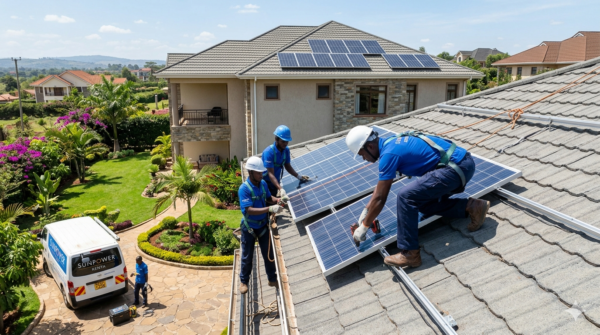
Gditech Solar Panel Installation Services in Kenya: Complete 2026 Homeowner Guide
Introduction: Why Solar Energy Is Becoming a National Priority in Kenya
Kenya is undergoing a rapid energy transformation driven by rising electricity demand, increasing utility costs, and the need for more reliable power infrastructure. For many households and businesses, electricity is no longer just a convenience — it is a critical operational necessity. This is what Gditech solar panel installation services in Kenya seeks to address.
Yet, despite improvements in grid expansion, many users still experience two persistent challenges:
- Unpredictable power outages
- Increasing monthly electricity bills
For a homeowner in Nairobi, this might mean spoiled food during outages or disrupted family routines. For a small business owner, it could mean lost revenue during peak hours. For commercial facilities, even a short blackout can translate into significant financial loss.
This is where solar energy becomes not just an alternative, but a strategic solution.
Modern solar technology allows users to generate, store, and manage electricity independently. With proper system design and installation, solar can significantly reduce dependence on the national grid while improving energy stability.
Working with a trusted provider such as Gditech Kenya ensures that your system is designed based on actual consumption patterns, installed safely, and optimized for long-term performance.
In this comprehensive guide, we explore everything you need to know about Gditech solar panel installation services in Kenya, including how systems work, how they are installed, what affects performance, and how to make the right investment decision.
Understanding Solar Panel Installation in Kenya
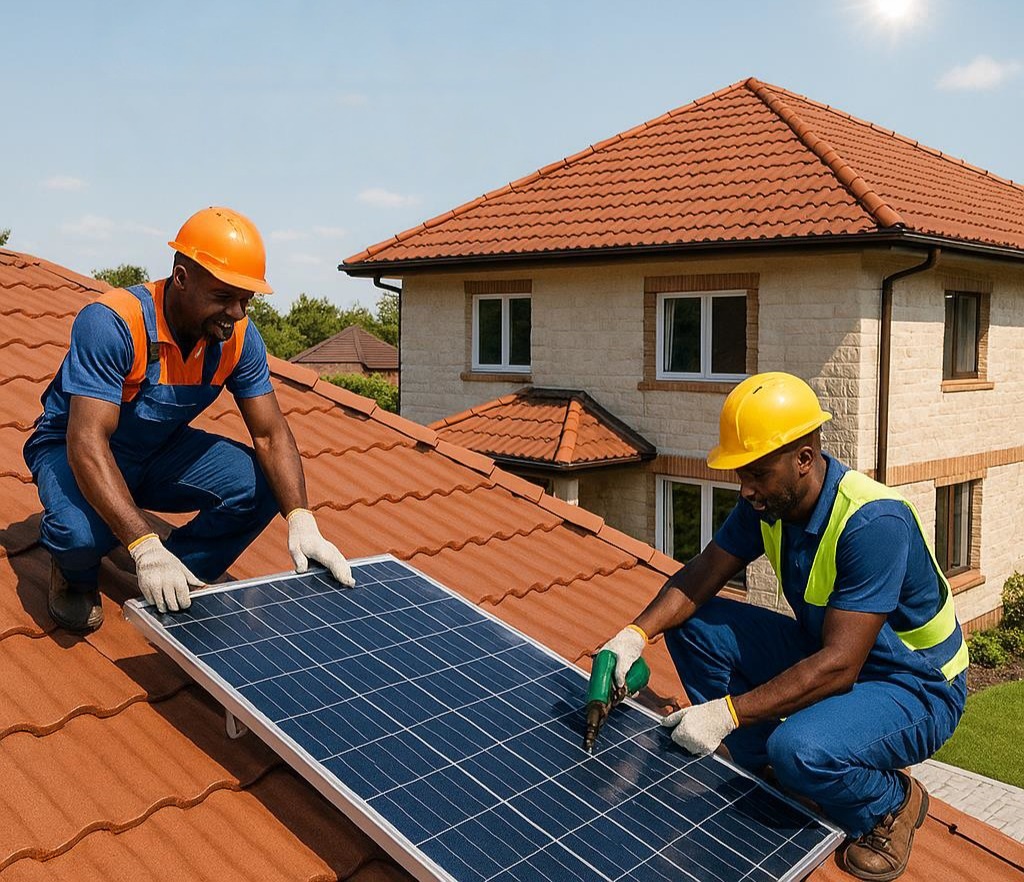 To fully appreciate the value of solar energy, it is important to understand what installation actually involves.
Gditech solar panel installation services in Kenya refer to the complete engineering and technical process of designing, supplying, installing, and commissioning a solar photovoltaic system that converts sunlight into usable electrical power.
This is not a simple hardware installation — it is an energy system design process that ensures efficiency, safety, and long-term reliability.
A complete solar setup typically includes:
- Solar panels (photovoltaic modules)
- Solar inverter (converts DC to AC power)
- Battery storage system (optional but highly recommended)
- Mounting structures (roof or ground-based)
- Electrical protection systems
- Monitoring and control systems
Why this matters in real life
In practical terms, this system allows a household in Kilimani to run lighting, TV, refrigerator, and Wi-Fi during outages. For a supermarket in Eldoret, it ensures uninterrupted refrigeration and POS systems. For a manufacturing SME, it stabilizes production cycles.
Solar installation is therefore not just a technical upgrade — it is an operational improvement.
How Solar Panel Installation Works in Kenya
Solar installation follows a structured engineering workflow. Each stage is critical to ensuring system efficiency and safety.
1. Energy Audit and Site Assessment
The first and most important stage is understanding your energy needs.
Installers evaluate:
- Monthly electricity consumption (kWh)
- Peak load demand
- Appliance types and usage patterns
- Roof structure and orientation
- Shading from trees or nearby buildings
Why this stage is critical
Many poorly performing solar systems in Kenya fail because this step was skipped or rushed. Without proper assessment, systems may be underpowered or oversized, leading to inefficiency or unnecessary cost.
2. System Design and Load Matching
Once energy usage is understood, engineers design a customized system.
This includes determining:
- Number and wattage of solar panels
- Inverter capacity (kVA sizing)
- Battery storage requirements (Ah or kWh)
- Expected backup duration
- Future expansion capacity
At this stage, the system is aligned with your lifestyle or business operations.
For example:
- A 3-bedroom home may require a different configuration than a retail shop
- A restaurant has different peak loads compared to an office
Proper design ensures optimal performance and return on investment.
3. Equipment Selection and Quality Assurance
The quality of components directly affects system lifespan and efficiency.
A professional installation includes:
- High-efficiency solar panels with strong conversion rates
- Pure sine wave inverters for stable output
- Lithium batteries with long cycle life
- Surge protection devices for electrical safety
Low-quality components may reduce upfront cost but significantly increase long-term maintenance expenses.
4. Installation and Mounting Process
This is the physical deployment stage. 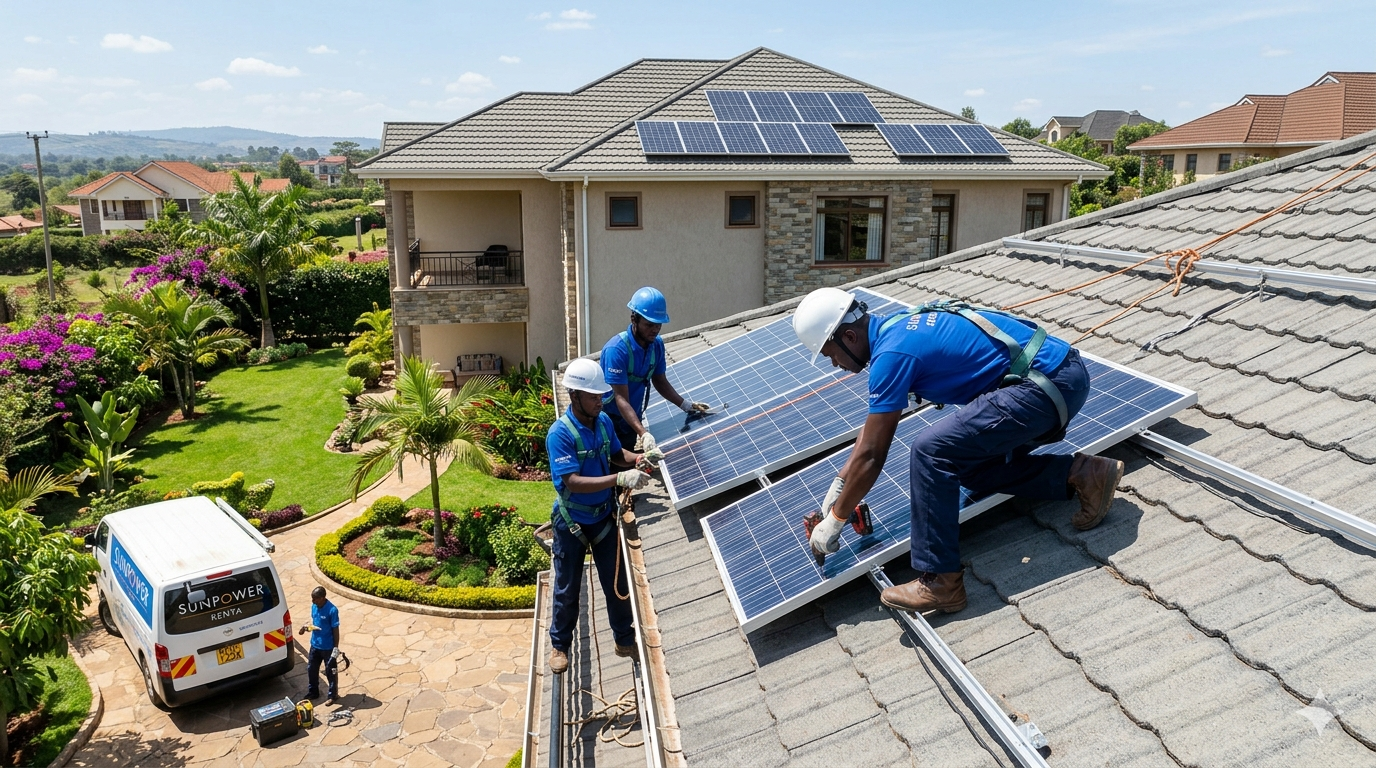
Technicians install:
- Mounting structures on rooftops or ground frames
- Solar panels aligned for maximum sun exposure
- Weather-resistant fittings to withstand wind and rain
Engineering considerations
- Tilt angle optimization for Kenya’s equatorial sun
- Structural load distribution on roofs
- Water leakage prevention
- Cable routing safety
5. Electrical Wiring and Integration
At this stage, the system becomes fully functional.
Connections are made between:
- Solar panels → inverter → battery → distribution board
Safety systems are installed to prevent:
- Overvoltage
- Short circuits
- Electrical surges
- System overloads
This stage requires certified electricians due to its complexity.
6. Testing, Commissioning, and Optimization
Before activation, the entire system is tested under real load conditions.
Checks include:
- Voltage stability
- Battery charging efficiency
- Inverter responsiveness
- Load balancing
Once confirmed, the system is activated and begins generating electricity immediately.
Key Benefits of Solar Panel Installation in Kenya
Solar energy is not just about reducing electricity bills — it is about transforming how energy is consumed and managed.
Proven Fact: Solar energy can reduce electricity costs by up to 70% in well-designed Kenyan residential systems.
1. Significant Reduction in Electricity Costs
Electricity bills in Kenya often fluctuate due to fuel surcharges and demand adjustments.
Solar reduces this burden by:
- Offsetting daytime usage
- Charging batteries for night use
- Reducing grid dependence
Over time, savings can fund other financial goals such as business expansion or home improvement.
Also: Cost of Solar Panel Installation in Kenya
2. Reliable Power During Outages
Power interruptions can disrupt daily life and business operations.
With solar plus battery storage:
- Homes remain functional during blackouts
- Businesses avoid downtime losses
- Critical systems remain operational
3. Energy Independence and Stability
Solar gives users control over energy production.
Instead of depending fully on external supply, users generate their own electricity consistently.
This is especially valuable for:
- Remote areas
- High-consumption businesses
- Institutions with sensitive equipment
4. Property Value Enhancement
Properties with installed solar systems are increasingly attractive in Kenya’s real estate market.
Buyers value:
- Lower operating costs
- Energy independence
- Modern infrastructure
5. Environmental Sustainability
Solar reduces reliance on fossil-fuel-based electricity generation, lowering carbon emissions and environmental impact.
Solar Installation Requirements in Kenya
Proper installation requires careful evaluation of several factors.
Roof Structure and Suitability
A strong roof ensures:
- Safety of installation
- Longevity of the system
- Proper alignment
Metal and concrete roofs are commonly used for installations.
Energy Consumption Profiling
Installers analyze:
- Daily usage patterns
- Peak demand hours
- Seasonal variations
This ensures accurate system sizing.
Battery Storage Planning
Battery selection determines backup duration.
Considerations include:
- Nighttime usage
- Outage frequency
- Budget constraints
Lithium batteries are increasingly preferred due to efficiency and lifespan.
Compliance and Safety Standards
Installations must follow electrical safety guidelines and proper grounding procedures to ensure system protection.
How to Choose the Right Solar Installer in Kenya
Selecting the right installer is one of the most important decisions in your solar journey.
Key Selection Criteria
| Factor | Importance |
| Experience | Ensures proper system design |
| Certification | Guarantees safety compliance |
| Warranty | Protects long-term investment |
| Support | Ensures system reliability |
Common Mistakes to Avoid
- Choosing based only on lowest price
- Ignoring warranty terms
- Using unverified installers
- Skipping proper site assessment
Why Choose Gditech Kenya Solar Solutions
Choosing the right partner ensures long-term success.
Gditech Kenya provides end-to-end solar solutions tailored to Kenyan homes and businesses.
Core Strengths
- Experienced solar engineers
- High-quality certified components
- Custom system design for every client
- Strong after-sales support
- Residential, SME, and commercial expertise
Case Study: Practical Impact Example
A Nairobi-based fruit juice SME reduced energy disruptions and improved operational continuity after installing a tailored solar system, resulting in:
- Lower monthly electricity costs
- Improved service delivery
- Increased productivity
How to get started with your solar installation project
- Book a consultation
- Receive energy assessment
- Approve system design
- Installation begins
- System activation
Need to install a solar system on your property? Hire the best solar installation contractors in Kenya
Are you interested in installing a reliable and efficient solar system in your property?
Gditech Kenya is a leading solar installation contractor in Kenya specializing in residential, SME, and commercial solar energy solutions.
Whether you are a homeowner looking to reduce electricity bills, a business owner aiming to eliminate downtime, or a commercial operator seeking energy stability, our engineers can design a system tailored to your exact needs.
We provide:
- Free site assessment
- Custom solar system design
- Professional installation
- After-sales technical support
Contact us today to get a detailed quotation and expert consultation.
You can reach us through any of the following channels:
- Call us or WhatsApp us. You can call us or send us a message on our phone number +254 715 01 45 10 and talk to one of our customer care representatives. They will answer your questions and guide you on how to order your RO system.
- Email us or fill out our form. You can email us at gditech2019@gmail.com or info@gditech.co.ke and we will get back to you as soon as possible. You can also fill out our contact us form and we will contact you shortly.
- Visit our workshop & showroom. You can visit our workshop in Ruiru or showroom in Eldoret, where you can see our machines in action and talk to our friendly staff. You are welcome to visit our branches located strategically in Ruru and Eldoret:
- Ruiru Branch: You can find us Next to Total Petrol Station- Kihunguro, Ruiru Kenya – Thika Road, where our dedicated team is ready to assist you.
- Eldoret Branch: You can visit our Eldoret branch at Rehema Complex, opposite Japara Ltd., along Oloo Street in Eldoret. Our branch staff will provide you with personalized guidance and support.
Gditech Solar Panel Installation Services: FAQ Section
- How much does solar installation cost in Kenya?
Typically between KSh 150,000 and KSh 850,000 depending on system size. - How long does installation take?
1–3 days for most residential systems. - Can solar power an entire home?
Yes, with proper system sizing. - Do solar panels work on cloudy days?
Yes, but at reduced efficiency. - Is solar worth it in Kenya?
Yes — due to rising electricity costs and frequent outages.


