
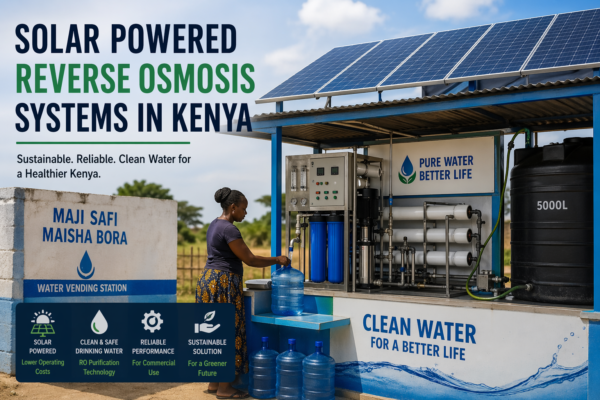
Solar Powered Reverse Osmosis Systems in Kenya: Reliable Off-Grid Water Treatment for Homes, Businesses, and Industry
Access to safe, consistent water is one of the biggest operational challenges for homes, farms, and manufacturing facilities across Kenya. Many areas rely on boreholes with high salinity, iron, or fluoride levels, while grid electricity remains unreliable or expensive. That is why solar powered reverse osmosis systems are quickly becoming the preferred solution for dependable, off-grid solar water purification.
This guide explains how these solar powered water purification systems work, what they cost in Kenya, how to choose the right configuration, and what to expect during installation. Whether you run a purified water business, manage agricultural irrigation, or supply water to a residential estate, the insights below reflect real-world field experience from installations across counties such as Mombasa, Nairobi, Kiambu, Machakos, Kajiado, Isiolo, Nakuru etc.
What is Solar Powered Reverse Osmosis Systems?
Solar powered reverse osmosis systems are water treatment systems that use solar energy to power pumps and filtration components that remove salts, dissolved minerals, bacteria, and contaminants from water. They are commonly used for borehole water, brackish groundwater, and desalination applications in off-grid locations where electricity supply is limited or costly.
Why Solar-Powered Water Treatment Is Growing Rapidly in Kenya
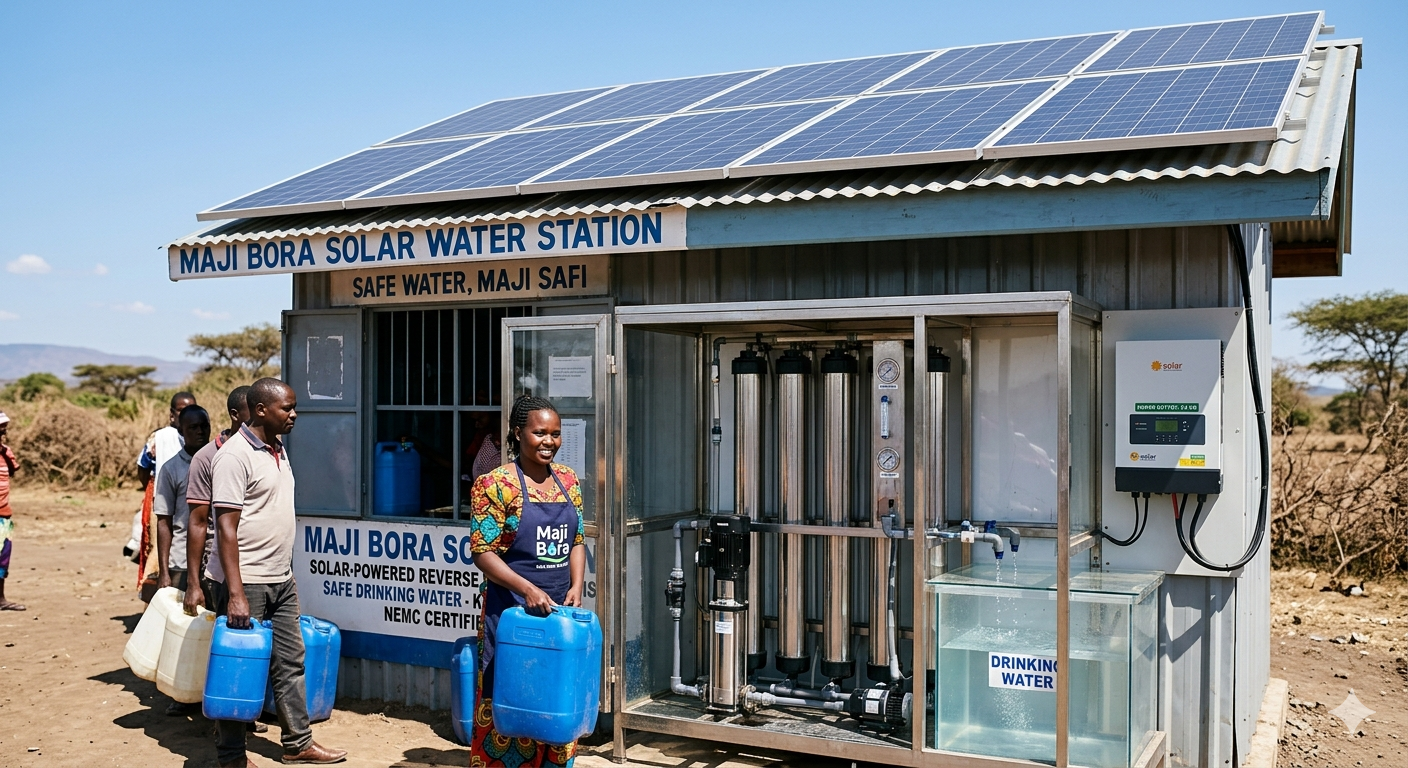 Water demand is rising across residential estates, factories, farms, and commercial developments. At the same time, electricity costs continue to increase, and many rural or peri-urban areas experience frequent outages.
A solar powered water purification system solves both problems at once. It produces safe water while reducing operating costs and dependency on the national grid.
From our field installations, three patterns consistently stand out:
- Boreholes in Rift Valley and Eastern regions often contain high fluoride or salinity
- Water businesses require predictable operating costs to maintain profitability
- Agricultural operations need reliable water supply during dry seasons
Solar-driven treatment systems address all three.
Key Benefits for Kenyan Consumers
- Energy independence
Solar systems operate without relying on grid power or diesel generators. - Lower operating costs
Once installed, sunlight becomes the primary energy source. - Consistent water quality
Reverse osmosis membranes remove contaminants to meet KEBS and WHO drinking water standards. - Environmental sustainability
Solar energy reduces carbon emissions and fuel consumption. - Scalability
Systems can be expanded as demand increases.
Pro Tip: Always size the solar array based on peak water demand, not average demand. Undersized systems are one of the most common causes of reduced production capacity.
How a Solar Reverse Osmosis System for Borehole Water Works
A solar reverse osmosis system for borehole water combines photovoltaic energy generation with advanced filtration technology. The system converts sunlight into electricity that powers pumps, sensors, and treatment units.
Core Components
- Solar panels
- Inverter and controller
- High-pressure pump
- Pre-filtration system
- Reverse osmosis membrane
- Storage tank
- Monitoring and safety controls
The Treatment Process
- Raw water enters the system from a borehole or storage tank
- Pre-filters remove sand, sediment, and suspended solids
- The high-pressure pump pushes water through the RO membrane
- Contaminants are separated and discharged as concentrate
- Clean water is stored for use or distribution
In Kenya’s climate, where sunlight availability is strong throughout the year, solar energy provides reliable power for daily operation.
Pro Tip: Install a raw water analysis before system design. Parameters such as Total Dissolved Solids (TDS), iron, and hardness determine membrane selection and system configuration.
Types of Solar RO Solutions Available in Kenya
Different industries require different system capacities and treatment levels. Choosing the right configuration depends on water quality, demand volume, and operational goals.
1. Domestic and Residential Systems
These systems typically produce:
- 250 to 2,000 liters per hour
- Drinking and cooking water for households or residential compounds
- Treated water from boreholes or wells
They are ideal for homes in off-grid areas or regions with poor water quality.
2. Commercial Solar Reverse Osmosis System
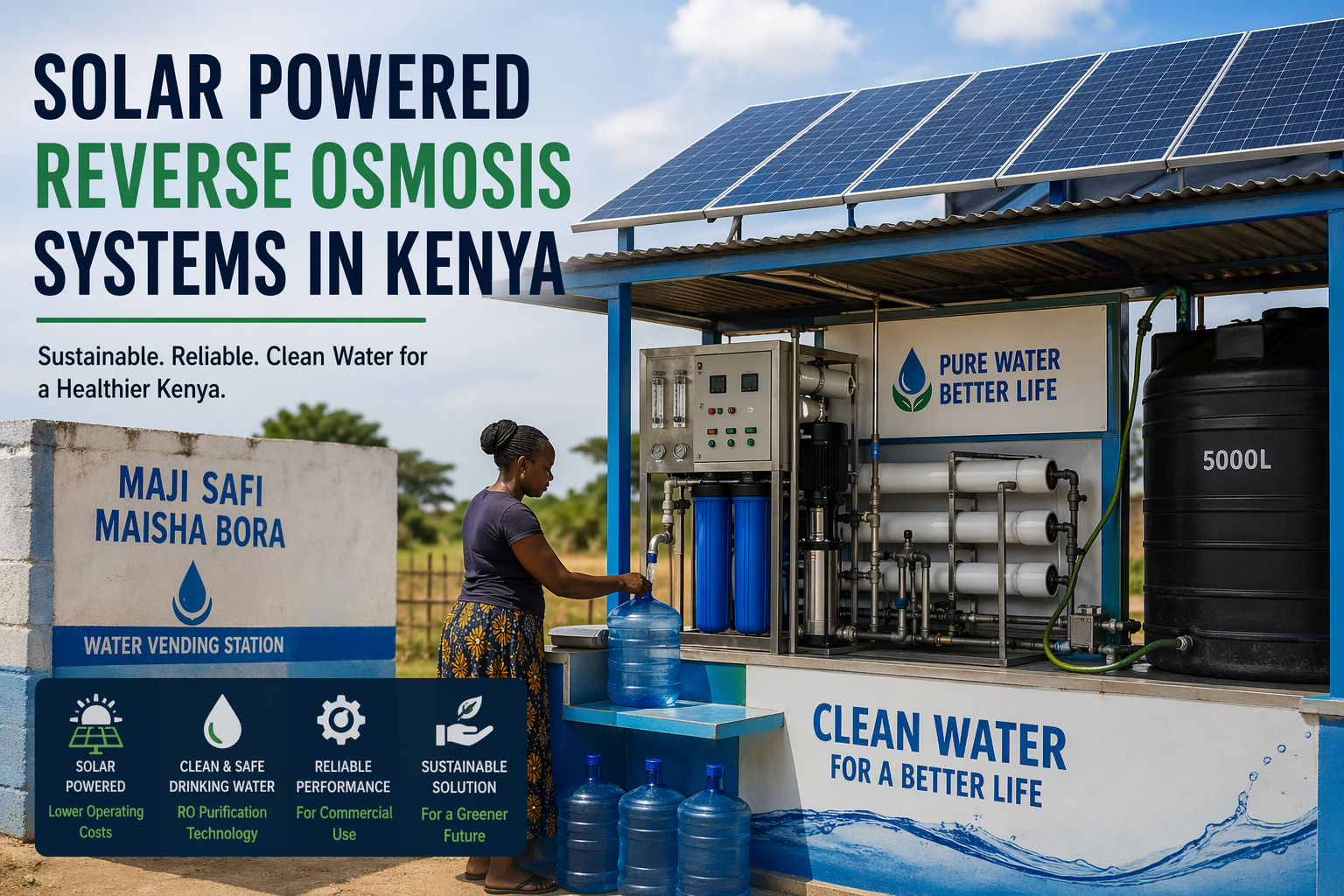 A commercial solar reverse osmosis system is designed for businesses that depend on consistent water supply.
Common users include:
- Water refilling stations
- Hotels and lodges
- Schools and hospitals
- Real estate developments
Production capacity usually ranges from:
- 2,000 to 20,000 liters per hour
3. Industrial and Agricultural Systems
Industrial installations support:
- Food processing plants
- Beverage manufacturing
- Irrigation systems
- Livestock operations
These systems often integrate automation and remote monitoring for continuous operation.
4. Solar Desalination System
A solar desalination system removes salt from seawater or highly saline groundwater. It is commonly used in coastal regions such as Mombasa, Kilifi, and Lamu.
These systems are engineered to handle very high salinity levels and corrosion risks.
Pro Tip: Coastal installations should always use corrosion-resistant materials such as stainless steel 316. Standard materials degrade quickly in salty environments.
Comparison Table: Solar vs Grid-Powered Water Treatment Systems
| Feature | Solar-Powered System | Grid-Powered System |
| Energy Source | Sunlight | Electricity utility |
| Operating Cost | Low after installation | High and recurring |
| Reliability | Independent of outages | Affected by power failures |
| Installation Cost | Higher upfront | Lower upfront |
| Environmental Impact | Low emissions | Higher carbon footprint |
| Best Use Case | Off-grid or high energy cost areas | Urban areas with stable power |
This comparison is frequently requested by project managers and water entrepreneurs evaluating long-term investment decisions.
Cost of Solar Powered Reverse Osmosis Systems in Kenya
The price of a system depends on capacity, water quality, and energy requirements. Below are realistic ranges based on installations across Kenya.
Typical Price Ranges
| System Capacity | Estimated Cost Range (KES) | Common Application |
| 250–500 LPH | 280,000 – 650,000 | Homes and small businesses |
| 1,000–2,000 LPH | 650,000 – 1,500,000 | Commercial operations |
| 5,000–10,000 LPH | 1,800,000 – 4,500,000 | Water refilling plants |
| 20,000 LPH and above | 5,000,000 – 12,000,000+ | Industrial use |
Factors That Affect Cost
- Water quality
High salinity or contamination requires additional filtration stages. - System capacity
Higher output systems require larger pumps and membranes. - Solar power requirements
Energy demand determines the number of solar panels. - Automation and monitoring
Advanced controls increase efficiency but add to initial cost. - Installation environment
Remote sites may require additional logistics and infrastructure.
Despite the higher upfront investment, most clients recover costs within two to four years through reduced electricity expenses.
Choosing the Right Off-Grid Solar Water Treatment System
Selecting the correct off-grid solar water treatment system requires careful planning and professional assessment. Many performance issues arise from poor system sizing or incorrect component selection.
Step-by-Step Selection Process
- Conduct water quality testing
- Determine daily water demand
- Evaluate site conditions and sunlight availability
- Design system capacity and energy requirements
- Install and commission the system
- Schedule routine maintenance
Key Technical Considerations
- Total Dissolved Solids (TDS)
High TDS levels require stronger membranes and higher pressure. - Flow rate requirements
Production capacity must match peak usage demand. - Energy storage
Battery storage ensures operation during cloudy periods. - Regulatory compliance
Systems must meet standards set by:
These standards ensure safety, environmental protection, and water quality compliance.
Common Mistakes When Installing Solar RO Systems
Many system failures are preventable. They usually result from poor planning or inexperienced installation.
- Mistake 1: Skipping Water Analysis
Installing a system without testing water quality leads to incorrect design and premature membrane failure. - Mistake 2: Undersizing the Solar Array
Insufficient solar power reduces system output and causes operational interruptions. - Mistake 3: Ignoring Maintenance Requirements
Filters and membranes require routine replacement to maintain performance. - Mistake 4: Choosing Based on Price Alone
Low-cost systems often use substandard components that fail quickly. - Mistake 5: Poor Installation Practices
Improper plumbing and electrical connections can damage equipment and create safety risks.
Avoiding these mistakes significantly improves system lifespan and reliability.
Real-World Applications of Solar-Driven High-Salinity Groundwater Treatment Systems
Across Kenya, solar-powered high-salinity groundwater treatment systems are solving water challenges in diverse sectors.
Agriculture
Farmers use treated water for:
- Irrigation
- Livestock watering
- Crop processing
Manufacturing
Industries rely on purified water for:
- Food and beverage production
- Pharmaceutical manufacturing
- Textile processing
Residential Developments
Housing estates use treated water for:
- Drinking
- Laundry
- General household use
Water Businesses
Entrepreneurs operate profitable water refilling stations using solar energy to reduce operating costs.
From experience, reliability is the factor clients value most. Once a system is properly designed and installed, daily operation becomes predictable and manageable.
Why Solar Powered Reverse Osmosis Systems Are a Smart Long-Term Investment
Energy and water are two of the largest operating expenses for many organizations. Combining solar power with reverse osmosis technology addresses both challenges simultaneously.
The long-term advantages include:
- Lower operational costs
- Stable water production
- Reduced dependency on fuel or electricity
- Compliance with water quality standards
- Sustainable environmental impact
Organizations that invest in these systems often see improved operational stability within the first year.
Solar powered reverse osmosis systems- Conclusion
Reliable access to safe water is essential for households, farms, and industries across Kenya. Solar powered reverse osmosis systems provide a practical, cost-effective solution for treating borehole and high-salinity water while reducing energy costs and improving operational reliability.
With proper system design, quality components, and professional installation, these systems deliver consistent performance for many years. Businesses and property owners who adopt solar-powered treatment solutions position themselves for long-term sustainability, predictable costs, and dependable water supply.
Get Expert Solar RO Installation and Support from Gditech Ltd
If you are planning to install a reliable water treatment system, working with experienced professionals makes all the difference. Every water source is unique, and the right solution depends on careful analysis, proper engineering, and high-quality equipment.
Gditech Ltd is a trusted provider of solar-powered water treatment systems in Kenya. Our team has installed systems for homes, farms, water businesses, and industrial facilities across the country. We design each project based on real water quality data and site conditions, ensuring consistent performance and long equipment life.
Why Choose Gditech Ltd for Your Solar RO System Needs
- Proven experience installing solar water treatment systems across Kenya
- Systems designed to meet KEBS, WHO, and international quality standards
- High-efficiency components sourced from reputable global manufacturers
- Professional installation, commissioning, and maintenance support
- Responsive customer service and technical guidance
Are you in the market for a solar powered reverse osmosis system? Gditech Ltd is a market leader in solar powered water purification system and solar RO solutions in Kenya. Our systems meet European, American as well as KEBS quality standards. If you are looking for experts to install for you a reliable and efficient off-grid solar water treatment system then look no further.
Contact Details:
- Phone/WhatsApp: +254 715 01 45 10
- Email: gditech2019@gmail.com | info@gditech.co.ke
- Address:
- Ruiru Branch: You can find us Next to Total Petrol Station- Kihunguro, Ruiru Kenya – Thika Road, where our dedicated team is ready to assist you.
- Eldoret Branch: You can visit our Eldoret branch at Rehema Complex, opposite Japara Ltd., along Oloo Street in Eldoret. Our branch staff will provide you with personalized guidance and support.
Reach out today to discuss your requirements, request a site assessment, and receive a detailed quotation.
Frequently Asked Questions About Solar RO Systems in Kenya
- How much does a solar powered reverse osmosis system cost in Kenya?
Most systems cost between KES 280,000 and KES 12,000,000, depending on capacity, water quality, and solar power requirements. Small residential units are the most affordable, while industrial systems require larger investments. A professional site assessment provides the most accurate pricing. - Can a solar RO system treat borehole water with high salinity?
Solar RO systems are specifically designed to remove salts, fluoride, and dissolved minerals from borehole water. High-salinity groundwater treatment systems use specialized membranes and pressure pumps to achieve safe drinking water standards. - What is the difference between solar RO and UV water purification?
Solar RO removes dissolved salts, heavy metals, and minerals, while UV purification only kills bacteria and viruses. For borehole water with high TDS or salinity, reverse osmosis is the more effective solution. - How long does installation take?
Most residential and commercial installations take 3 to 10 days, depending on system size and site conditions. Larger industrial systems may require additional time for infrastructure preparation and commissioning. - Where can I find solar powered reverse osmosis systems near me in Kenya?
Reliable suppliers operate in major towns such as Nairobi, Kiambu, Nakuru, and Mombasa. Choosing a company with local installation experience ensures compliance with Kenyan standards and faster technical support when needed. - How long do reverse osmosis membranes last?
RO membranes typically last 2 to 5 years, depending on water quality and maintenance practices. Regular filter replacement and system servicing significantly extend membrane lifespan and maintain water quality.


